FirstNet: The Dedicated Wireless Network for Public Safety
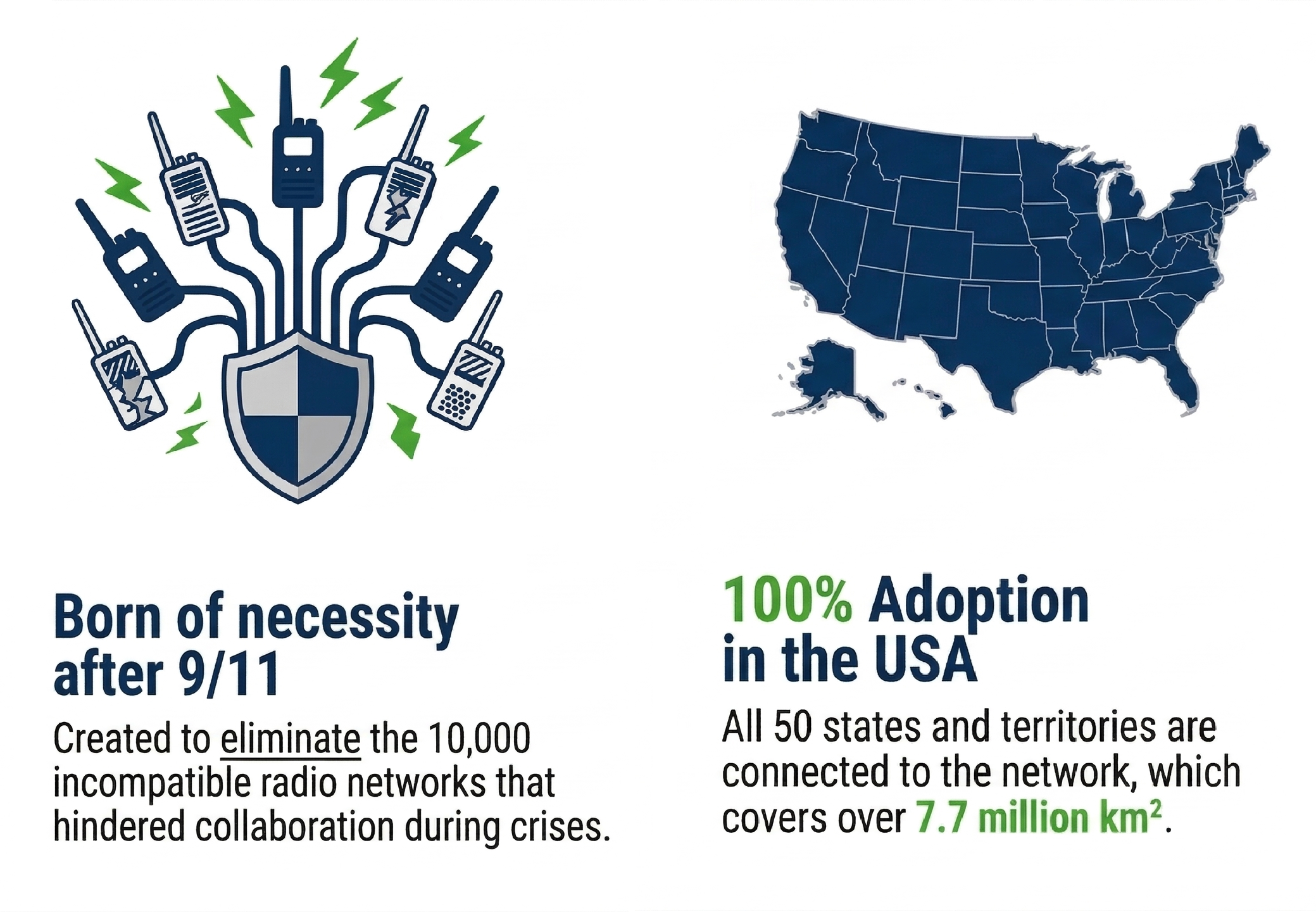
In times of crisis, reliable communication is the lifeline of public safety. Historically, first responders in the United States relied on over 10,000 fragmented and incompatible Land Mobile Radio (LMR) networks, which severely hindered cross-agency collaboration during major emergencies. To solve this, the First Responder Network Authority (FirstNet) was created as an independent U.S. government authority tasked with building a nationwide, interoperable broadband network for public safety.
Operating on a dedicated physical core and utilizing a specialized 20 MHz slice of the 700 MHz spectrum known as Band 14, FirstNet represents a monumental technological leap. By providing first responders with preemptive, prioritized 4G LTE and 5G connectivity, advanced interoperability with legacy LMR systems, and strict encryption protocols, FirstNet equips modern agencies with the reliable mission-critical voice, data, and video services necessary to save lives and protect communities.
1. Mission of FirstNet
The catalyst for a nationwide broadband network arose from the tragic events of September 11, 2001, which exposed the dangerous inability of existing public safety networks to handle mass crises. In response, Congress passed the Middle Class Tax Relief and Job Creation Act of 2012, which established FirstNet and allocated $7 billion alongside the dedicated Band 14 spectrum for the initiative.
Governed by a 15-member Board of Directors with expertise in public safety and technology, FirstNet sits within the National Telecommunications and Information Administration (NTIA). In 2017, FirstNet entered into a public-private partnership with AT&T to build and operate the network. By December 2023, AT&T successfully completed the initial five-year network build-out. All 50 states, two territories, and the District of Columbia opted into the network, granting first responders unprecedented access to a secure, unified communications platform.
2. Core Network Innovations and Architecture
FirstNet is distinct from standard commercial cellular networks due to its specialized architectural innovations designed to ensure survivability and availability:
- Dedicated Physical Core: FirstNet utilizes its own dedicated physical core infrastructure. Even when sharing physical cell sites with commercial AT&T traffic, all FirstNet communications route through this highly secure, separated core, ensuring mission-critical reliability during extreme network loading.
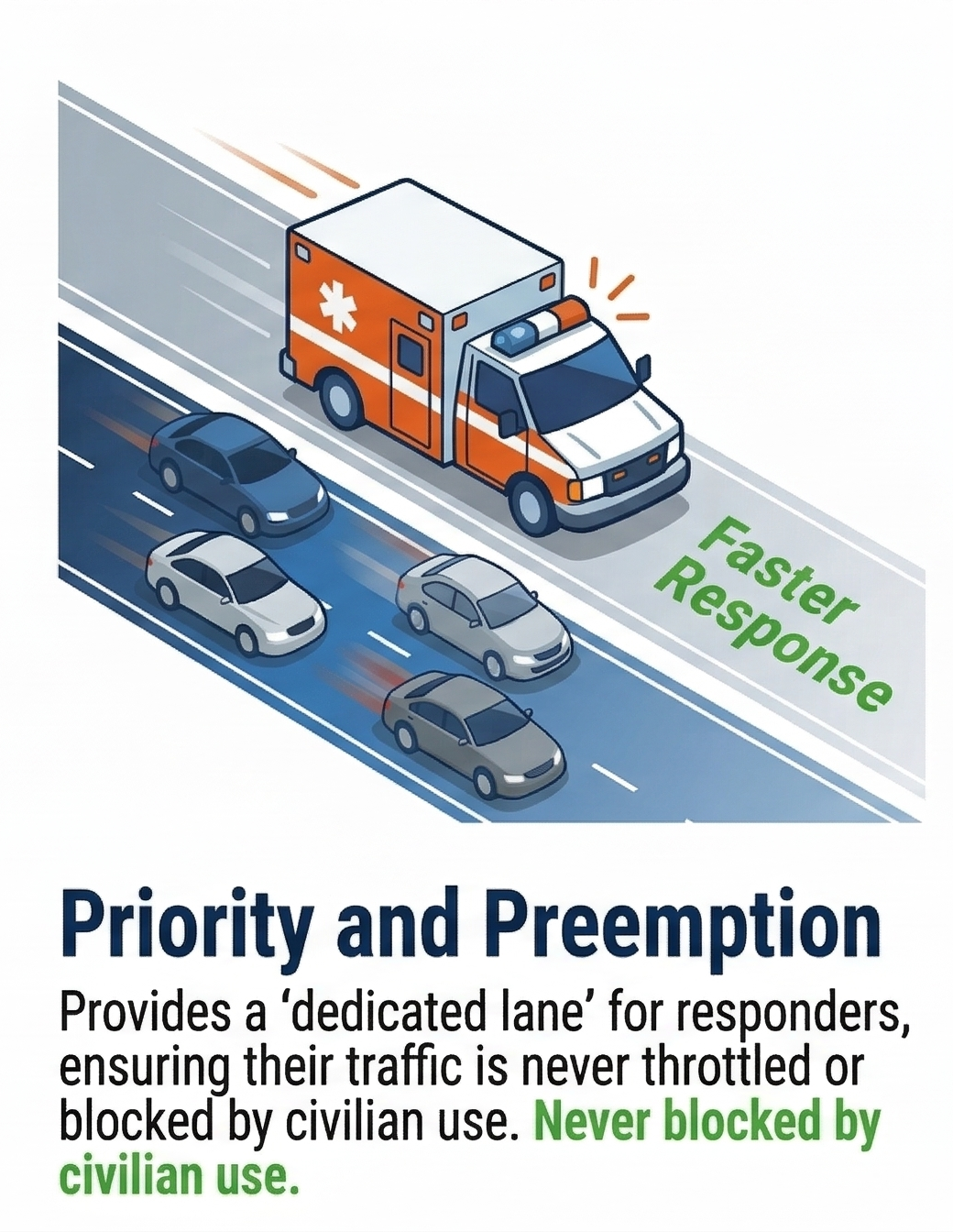
- Band 14 Dedicated Spectrum: The 700 MHz Band 14 spectrum provides a “dedicated lane” exclusive to public safety, avoiding the natural congestion of public cellular networks.
- True Priority and Preemption: Unlike commercial networks that treat all data equally, FirstNet integrates priority and preemption capabilities into its 4G architecture. During emergencies, first responder traffic is automatically prioritized, and if necessary, commercial traffic is preempted (dropped or delayed) to ensure public safety communications are completed without bandwidth caps or throttling.
FirstNet actively participates in the 3rd Generation Partnership Project (3GPP) global standards body to represent public safety needs, ensuring that current deployments (Releases 17 and 18) and future evolutions (like 5G-Advanced and 6G) include crucial emergency communication enhancements.
3. Mission-Critical Capabilities
The transition to LTE broadband allows FirstNet to support bandwidth-intensive applications that traditional narrowband LMR networks cannot, completely changing how responders operate in the field.
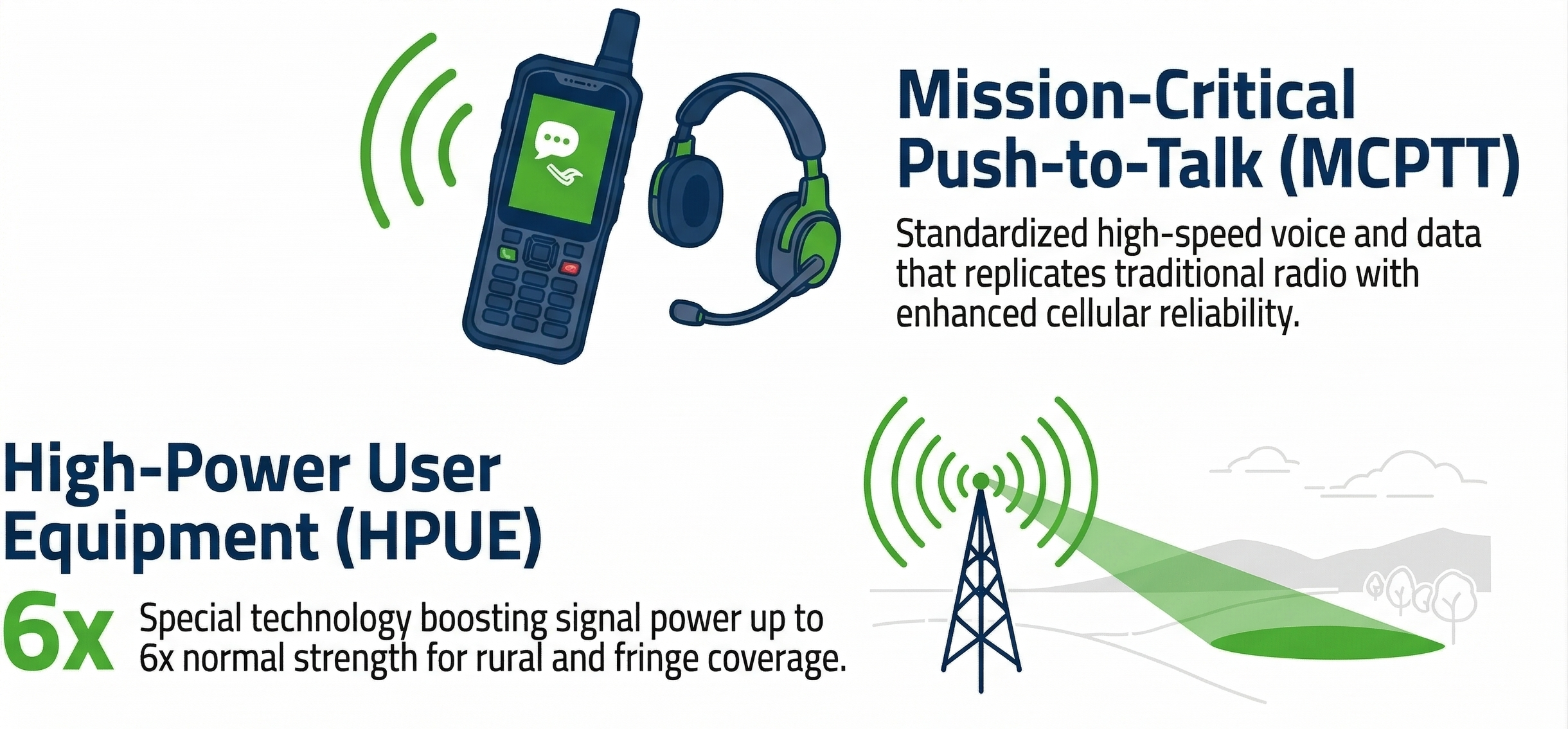
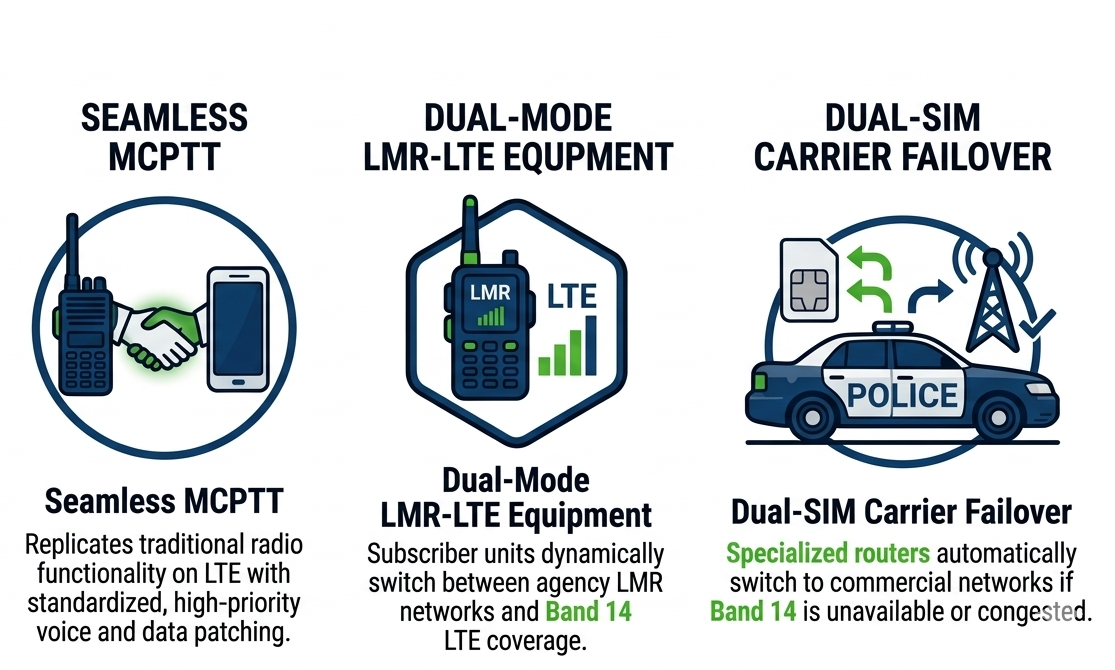
- Mission Critical Push-to-Talk (MCPTT): The FirstNet Rapid Response solution offers 3GPP-based MCPTT, replicating the functionality of LMR trunked radio systems but over a nationwide LTE footprint. Features include emergency calling, user status checks, Mutual Aid talkgroup patching, and the capacity for up to 3,000 users per talkgroup.
- Mission Critical Data and Video (MC-Data & MC-Video): FirstNet ensures that first responders can stream real-time video, access GIS mapping, transmit patient biometrics, and share rich data files using rigorous Key Performance Indicators (KPIs) to guarantee low-latency delivery even during congestion.
- High Power User Equipment (HPUE): To address coverage limits, FirstNet supports HPUE, which boosts transmission signal power up to six times the normal strength, dramatically increasing range at the edges of the network (crucial for remote emergency medical services and rural operations).
4. Interoperability and Bridge Strategies
Integrating the advanced capabilities of FirstNet into agencies that have historically relied on legacy LMR requires seamless interoperability and “bridge” technologies.
- LMR-to-LTE Interoperability: FirstNet ensures that users communicating via MCPTT can seamlessly patch into legacy digital trunked or conventional LMR systems. Using interoperability gateways like RoIP and Critical Connect, dispatchers can bridge the divide between standard radios and modern smartphones.
- Dual-Mode Devices: FirstNet’s ecosystem supports dual-mode LMR-LTE subscriber equipment, allowing a single device to dynamically switch between FirstNet LTE and agency LMR networks.
- In-Vehicle Dual-SIM Routers: Specialized mobile routers, such as the BEC MX-1000, serve as vital bridge technologies for public safety vehicles. By featuring dual-SIM and dual-radio capabilities, these routers can connect to commercial 4G networks today and failover directly to FirstNet’s Band 14 as coverage expands. These routers also establish secure Wi-Fi hotspots around the vehicle, process high-speed vehicle telemetry, and leverage cloud-based management systems (LCMS) to actively monitor network signal strength and fleet locations.
5. Security, Deployability, and Future Evolution
FirstNet accounts for the realities of disaster response, where infrastructure is often compromised, and information security is paramount.
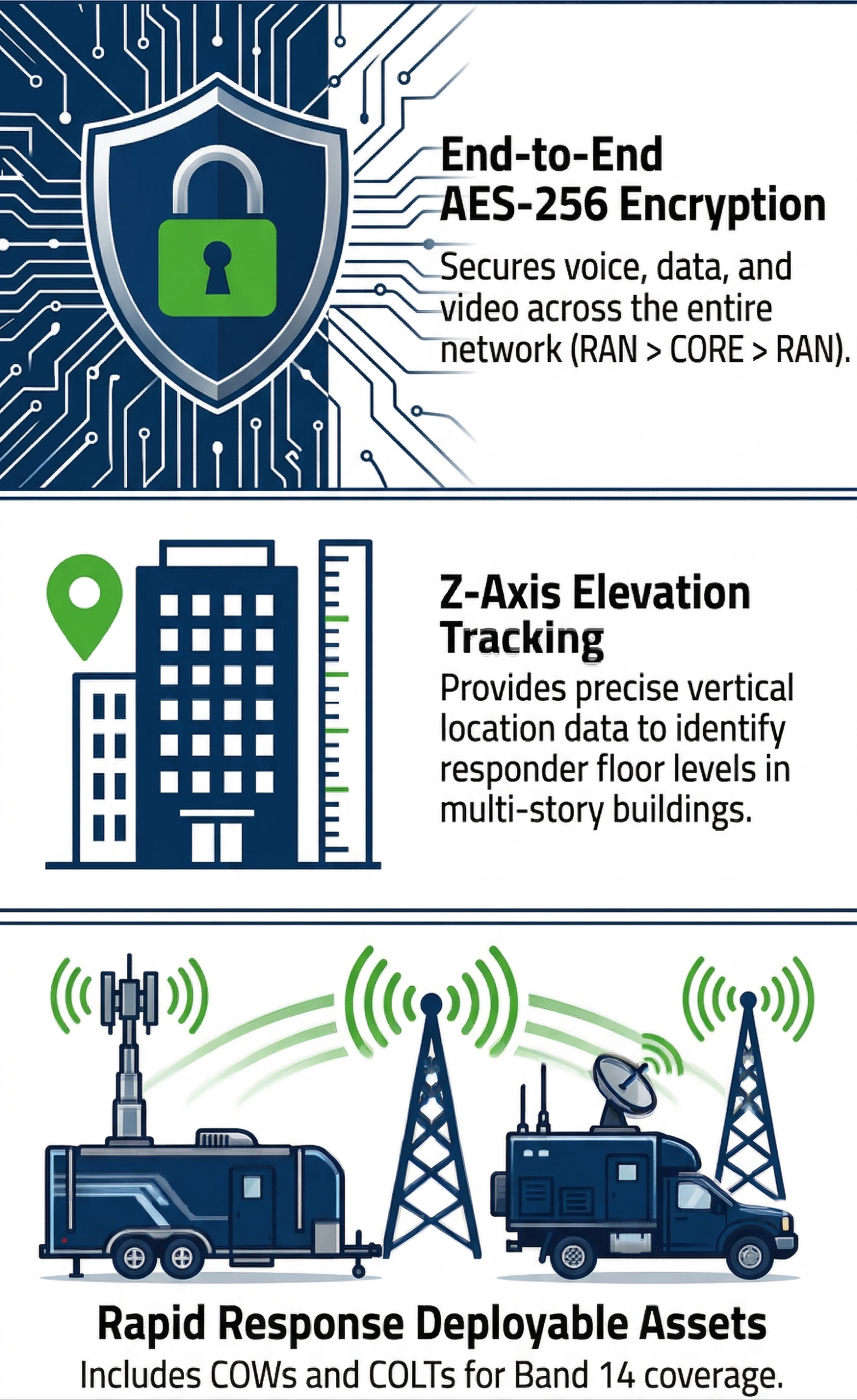
- End-to-End Encryption: To protect sensitive personal and operational data, FirstNet provides AES-256-bit encryption for voice, data, and video. Furthermore, FirstNet is uniquely engineered to encrypt traffic across the entire network—from the Radio Access Network (RAN) through the core and back (RAN>CORE>RAN), exceeding standard commercial security levels.
- Deployable Assets and Response Teams: Because emergencies occur outside of standard coverage zones, FirstNet maintains a dedicated Network Disaster Response (NDR) team and a Response Operations Group (ROG). They manage a fleet of deployable network assets, including Cells on Wheels (COWs), Cells on Light Trucks (COLTs), and even airborne or tethered systems, restoring or providing temporary Band 14 coverage precisely where responders need it.
- Z-Axis Location Services: In complex urban environments, traditional GPS (X-Y mapping) is insufficient. FirstNet is pioneering actionable “Z-Axis” (elevation) location services to accurately pinpoint first responders’ vertical height or floor level inside multi-story buildings, a vital asset for firefighter and police rescue safety.
Summary
FirstNet has successfully delivered on its mandate to construct a resilient, dedicated broadband network for public safety. By blending the steadfast reliability of legacy radio with the high-speed data capabilities of modern LTE and 5G, it solves the decades-old problem of communication fragmentation. Through continuous 3GPP standards innovation, deployment of mission-critical push-to-talk, strict end-to-end encryption, and unparalleled disaster deployability, FirstNet is actively revolutionizing how first responders collaborate, vastly improving response times and operational safety on a national scale.