
No content found
This product doesn’t have any diagrams yet.
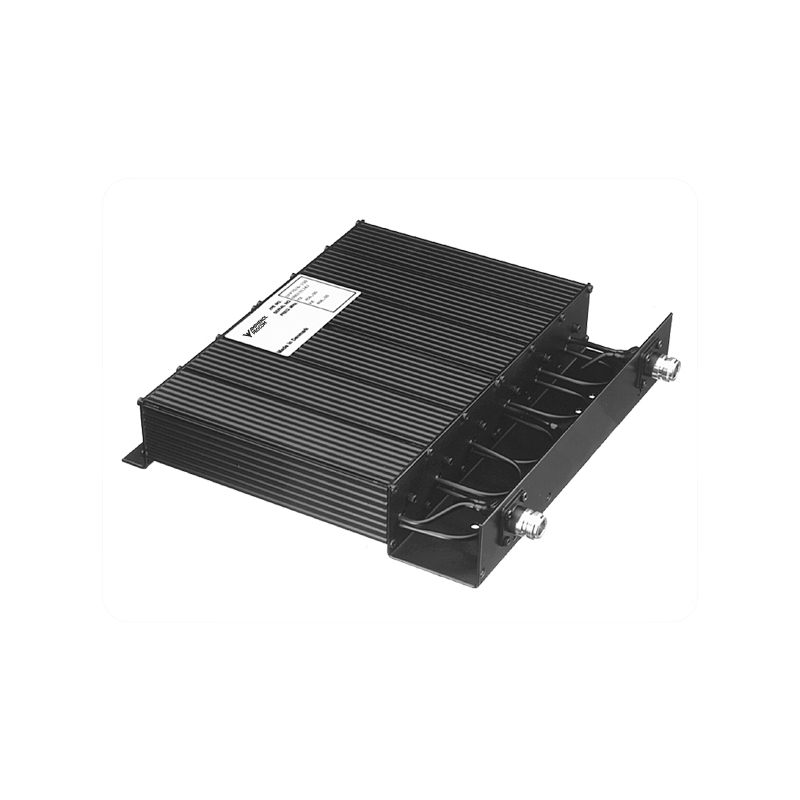
| Electrical | |
| Model | BRF 70/6-150 |
|---|---|
| Filter Type | Band-reject (notch) filter |
| Frequency | 380 – 470 MHz |
| Max. Input Power | 50 W @ IL < 1.0 dB 150 W @ IL < 0.5 dB |
| Pass Band Insertion Loss | < 0.5 dB |
| Impedance | 50 Ω |
| Reject Attenuation | > 25 dB @ 5 MHz BW (See curve) |
| VSWR | 20 – 380 MHz : < 1.5 :1 420 – 530 MHz : < 2.0:1 |
| Environmental | |
| Operating temperature range | -30 °C to +60 °C |
|---|---|
| Mechanical | |
| Connection(s) | N(f) (BNC(f), TNC(f), UHF(f) or SMA(f) on request) |
|---|---|
| Historic Brand | Amphenol Procom |
| Dimensions | 260 x 250 x 50 mm / 10.24 x 9.84 x 1.97 in. |
| Weight | Approx. 2.5 kg / 5.51 lb. |
This product doesn’t have any diagrams yet.
| Model | Product No. | Add To Quote |
|---|---|---|
| Band-reject (notch) filter for the 450 MHz Band | 200001244 |
You need to be logged in into your account to view downloadable documents.


All dimensions are given in mm.
The notch filter resonators can also be separately tuned to three different frequencies in a “multiple notch” configuration, but the attenuation on each frequency is then only approximately one third of the normal attenuation when all notches work together.
Click below to sign up for our monthly newsletter to keep informed about our latest products and news from Amphenol Procom.